
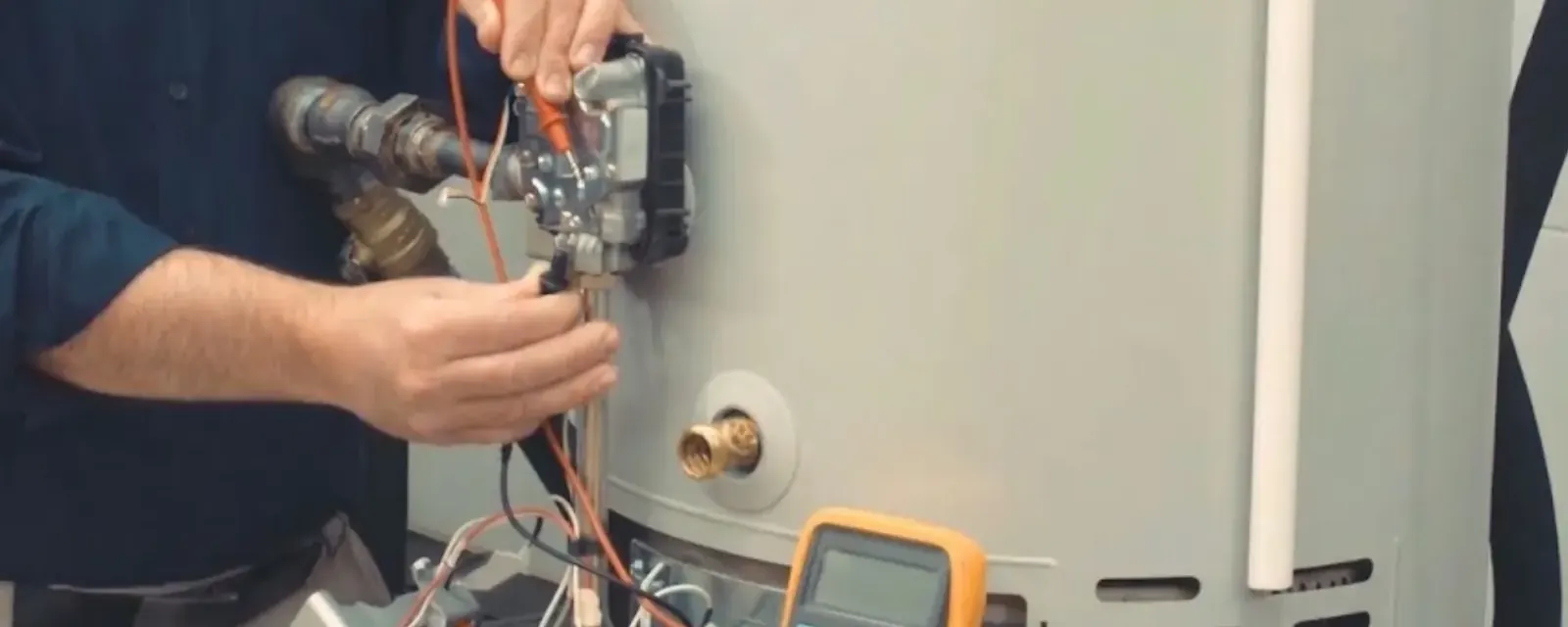
No hot water: the common causes
A water heater that makes no hot water at all usually has lost its heat source. On an electric unit that is often a burned lower element, a tripped high limit switch or a failed thermostat. On a gas unit it is typically a pilot that will not stay lit, a bad thermocouple or a gas valve that is not opening.
Lukewarm water points elsewhere. A broken dip tube lets cold water mix in at the top of the tank, and sediment on the bottom insulates the burner or covers the lower element. Each problem has a different fix, which is why a quick diagnosis beats guessing at parts.
- No hot water at all: check the breaker or pilot, then call.
- Hot water that runs out in minutes: element or dip tube.
- Rumbling or popping from the tank: sediment buildup.
- Water that smells of rotten eggs: reaction at the anode rod.
Leaking water heater: what to do in the first ten minutes
Where the water comes from matters. A drip from the temperature and pressure relief valve or its discharge pipe often means a failing valve or excess pressure and may be fixable. Water seeping from the tank body or the seam at the bottom means the steel has corroded through, and no repair will fix that.
Shut the cold water supply valve on the pipe above the heater, turn the thermostat down or the breaker off, and leave the gas valve alone unless you can reach it safely. If the tank sits in a garage or closet, move stored items away from the water. Then call, because a tank that leaks slowly can release a full load of water with little warning.
If the tank is done, our water heater replacement crew can size and set a new one.
How a repair visit works
- The plumber confirms fuel type, tank size and age from the data label, and asks what the heater was doing before it stopped.
- Power or gas is tested. On electric units that means checking the elements and thermostats with a meter. On gas units it means the pilot, thermocouple and gas control.
- Safety parts are inspected, including the relief valve, the discharge pipe and the venting on a gas unit.
- You get the repair price and the alternative in plain terms before any part is installed.
Chloramine, local water and the parts that wear first
The City of Huntsville's 2025 water quality report lists chloramines as its disinfectant, with a 2025 average of 3.09 mg/L. Many plumbers see rubber and plastic parts, such as seals and fill valves, wear faster in chloraminated water than in water treated with free chlorine. It is a pattern to watch, not a guarantee for any one house.
The same report shows the city's supply comes from groundwater wells plus surface water purchased from the TRA Huntsville Regional system. The report does not give a hardness figure, so test your tap or ask the water utility for its numbers. Hard water leaves scale on elements and the tank floor, and a yearly flush is cheap insurance on any tank heater.
Repair or replace: a quick way to decide
| Situation | Usually better to | Why |
|---|---|---|
| Tank under about 8 years old, one failed part | Repair | A new element or thermostat costs far less than a new tank. |
| Tank over 10 to 12 years old, second repair in a year | Replace | Repeat parts on an aging tank rarely pay back. |
| Water at the tank base or seam | Replace | Corrosion through the steel cannot be repaired. |
| Pilot or element fault on a newer unit | Repair | The tank is sound and the part is the problem. |
Two repairs in a year on a tank past ten years old usually costs more than a replacement spread over the same period. The plumber will say so if that is where your heater stands.
What drives the cost of a water heater repair
Insurance generally treats a worn-out water heater as maintenance, but sudden water damage from a failed tank may be covered, depending on your policy. Take photos before cleanup. Call for the price on your specific heater.
Relief valves, discharge piping and expansion control on a water heater fall under the International Plumbing Code (IPC), which the City of Huntsville lists at the 2024 edition.
Water heater repair answers for Huntsville
Yes. Our dispatch line runs 24/7. A tank leaking onto a floor or a gas smell near a heater is treated as urgent. For a gas smell, leave the house and call the gas utility or 911 first.
The usual causes are a failed lower element, a broken dip tube or heavy sediment taking up space in the tank. A short test of each element and a look at the dip tube usually identifies which.
The noise is steam bubbles forming under a layer of sediment. It is not a sudden hazard, but it means the tank is overheating in spots and wearing out sooner. A flush often quiets it.
Gas work should be done by a licensed plumber. Ask for the Responsible Master Plumber's license number and check it with the Texas State Board of Plumbing Examiners before work begins.
Many tank units last roughly 8 to 12 years depending on water quality, sediment and maintenance. The date code on the data label gives the age, and the plumber can read it for you.