
Disposal jammed, humming or leaking
A humming disposal that will not spin is jammed. A silent disposal may have tripped its reset button or lost power. A leak from the bottom of the unit means the housing has failed, and from the top or side usually points to a seal or drain connection.
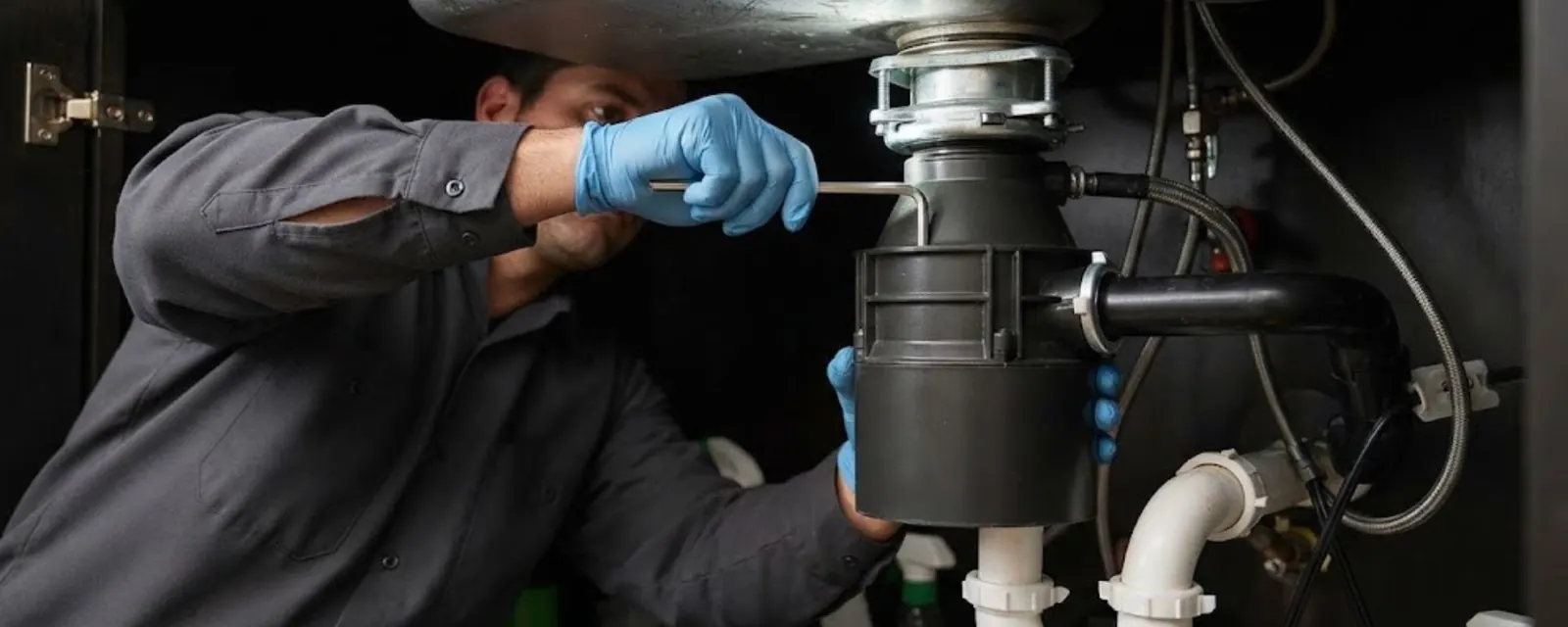
Turn off power at the breaker before touching it. A plumber uses a hex wrench at the bottom to free the flywheel and tests the reset. If the unit leaks from the body, replacement is the only fix.
- Humming, not spinning: jammed flywheel.
- Silent: reset button or power.
- Leak from the bottom: housing failure.
- Leak at the top: sink flange seal.
- Standing water: clogged drain.
What to do and not do with a jammed disposal
- Switch off power at the wall switch and the breaker.
- Do not put your hand in the grinding chamber.
- Use tongs to remove anything you can see.
- Press the reset button only after the unit cools.
- Do not pour drain cleaner into it.
Fixing the clog behind the disposal
Standing water in both sink basins usually means the blockage is beyond the disposal. A disposal grinds food into small pieces that stick to the grease coating in the line. See drain cleaning for clearing the line.
If the dishwasher drain backs into the sink, the connection at the disposal inlet may be clogged. The plumber knocks out the plug on a new unit and checks the air gap or high loop.
Repair or replace the disposal
| Symptom | Usual fix | Notes |
|---|---|---|
| Jam | Clear with hex wrench | Quick, unit is reused. |
| Tripped reset | Reset and test | Check for overload. |
| Leak at body | Replace unit | Housing cannot be sealed. |
| Motor burned out | Replace unit | Not cost effective to repair. |
What not to put down a disposal
Running cold water before, during and for a few seconds after use helps carry waste past the trap.
- Grease, fat and oil.
- Coffee grounds in large amounts.
- Fibrous vegetables such as celery and corn husks.
- Pasta and rice that swell in water.
- Bones, fruit pits and hard objects.
- Chemical drain cleaners.
Installing a new disposal
- Power is shut off and the old unit is unmounted and removed.
- The sink flange is cleaned and resealed, and the mounting ring is set.
- The new disposal is attached, wired or plugged in, and connected to the drain and dishwasher line.
- The unit is tested with water and the plumber checks for leaks.
Habits that keep a disposal alive
Run cold water while it works and for several seconds after. Feed small amounts. Avoid fibrous peels, bones, grease and large pits. Citrus does not harm it but it does not clean it either. Do not pour grease down, because it solidifies downstream and creates the clogs that make a disposal back up.
If you rent in Huntsville, report a jam early. A disposal run in a jam burns the motor.
Reset and jam checks you can do safely
With power off at the switch and the breaker, use a hex key in the bottom of the unit to turn the flywheel back and forth and free a jam. Press the red reset button on the bottom after it cools. Never put a hand into the grinding chamber, even with the power off, and use tongs for anything you can see.
Disposal repair and replacement pricing
Home insurance seldom covers a worn-out disposal but may cover water damage from a sudden leak. Call for a price.
A disposal's drain connection and air gap arrangements follow the International Plumbing Code (IPC), which the City of Huntsville lists at its 2024 edition.
Garbage disposal questions
Yes. The 24/7 line takes disposal flooding and jam calls any hour.
A foreign object or food is jamming the flywheel. A plumber frees it with a hex wrench.
A leak at the sink flange or drain connection can be sealed. A leak from the body means replacement.
Many last roughly 8 to 15 years depending on use and care.
Heavy use adds solids to the tank. If you are on septic, use it sparingly and ask your plumber.