
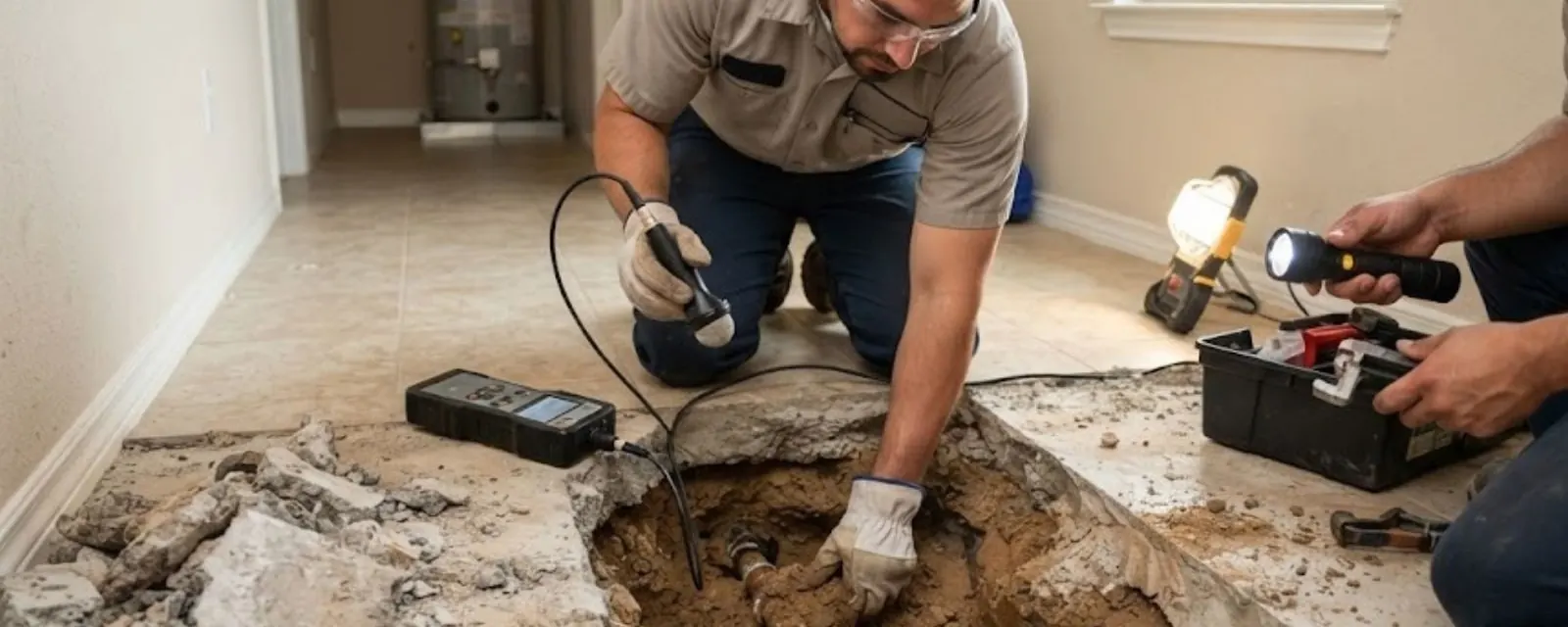
Signs of a slab leak you should not ignore
A slab leak rarely announces itself with a flood. The first clue is usually the water bill, followed by a meter that moves with every fixture off. Hot water slab lines also leave warm patches on tile or hardwood, and a sound like trickling water under the floor at night is a common sign.
Cracks in tile, damp carpet near baseboards, a drop in water pressure and mold smell near the foundation edge are other flags. Because water under a slab can undermine the soil, treat these symptoms as urgent rather than waiting for the next billing cycle.
- Meter moves with all fixtures off.
- Warm or hot spot on the floor.
- Sound of running water under the floor.
- Unexplained jump in the water bill.
- Damp carpet, cracked tile or musty smell along walls.
What to do while you suspect a slab leak
- Close the main valve when no one is home.
- Do not run the water heater if the leak is on the hot line.
- Keep rugs and furniture off warm floor patches.
- Note where the floor feels warm or damp.
- Call the dispatcher before moving anything heavy.
Why slab leaks happen in this part of Texas
The Texas State Historical Association describes Walker County's forest soils as sands and clays. Clay-rich soil swells when wet and shrinks when dry, and that movement can stress pipes cast in or running under a slab. Pinhole leaks from corrosion, abrasion where a line rubs concrete and a failed joint are the other common causes.
The City of Huntsville's permit page lists a pier, foundation and ground plumbing inspection as the first plumbing inspection on new work, which tells you the ground plumbing stage is a recognized step in local construction. Older homes may have copper or galvanized lines in that zone, and a plumber can tell you what yours has.
How a slab leak is located and fixed
- The plumber isolates hot and cold lines and uses a pressure test to find which one is losing water.
- Acoustic equipment and a pipe locator trace the line under the floor to the exact point of the leak.
- You are shown three options: a spot repair by opening the slab above the leak, rerouting the line overhead, or repiping the affected zone.
- After repair the line is pressure tested again and the plumber confirms the meter is still.
Spot repair, reroute or repipe: how to choose
| Option | Works best when | Trade-off |
|---|---|---|
| Spot repair through the slab | One leak on otherwise sound pipe | Concrete is cut and patched, floor covering is disturbed. |
| Reroute overhead or through walls | Under-slab line is old or leaks repeatedly | More piping above, less disruption to the floor. |
| Repipe the affected zone | Pipe material is failing in several places | Higher cost, longer-term fix. |
A single pinhole in a newer line is a good candidate for a spot repair. Several failures in the same run point to rerouting or repiping.
Emergency and after-hours slab leak calls
Most slab leaks are not a midnight emergency, but a leak that is soaking flooring, stressing a wall or running at high volume is. The 24/7 line takes those calls. Shut the main, turn off the water heater supply and document the damage for your insurer. Our leak detection page explains how the leak is located before anything is opened.
What drives the cost of slab leak repair
Homeowner policies vary on slab leaks. Some cover the access damage and not the pipe, and some exclude long-term seepage. A written detection report helps your claim. Call for a price on your property.
Piping that is rerouted or replaced after a slab leak is installed to the International Plumbing Code (IPC) that the City of Huntsville lists at its 2024 edition.
Slab leak questions from Huntsville homes
Yes. The 24/7 line takes active slab leak calls. Shut the main valve and call, and the dispatcher will explain what to expect.
A running meter with fixtures off, warm floor spots and the sound of water under the floor are the typical signs. A pressure test confirms which line is involved.
Water under a slab can wash out or soften soil and contribute to movement over time. That is one reason slab leaks are worth fixing promptly.
Usually not. Spot repairs and reroutes are done with the house occupied, though water is off for part of the day and floors in the work area are disturbed.
It depends on the policy. Many cover sudden damage and some cover the cost to access the pipe. Ask your agent before work and keep the detection report.