
Signs your pipes are due for replacement
Pinhole leaks that appear in different places are the strongest sign, because they mean the pipe wall is failing everywhere. Rusty or brown water, weak pressure that improves after you open a second tap, and green stains on copper also point to corrosion.
Older homes may still have galvanized steel, which rusts from the inside. Check the pipe under a sink or at the water heater. A magnet will stick to galvanized steel and not to copper.
- Repeated leaks in different spots.
- Brown or rusty water.
- Low water pressure throughout the house.
- Green stains or pinholes on copper.
- Galvanized pipe visible at the heater or meter.
What to do before a repipe starts
- Clear access to the attic, crawl space and water heater.
- Move furniture away from walls where lines run.
- Plan where to shower and cook on cutover day.
- Protect floors and belongings near the work.
- Arrange for pets to be elsewhere.
PEX, copper and CPVC compared
| Pipe | Strengths | Cautions |
|---|---|---|
| PEX | Flexible, fewer fittings, quick to install | Sunlight damages it, some fittings differ by brand. |
| Copper | Long track record, durable | Higher material cost, can corrode in aggressive water. |
| CPVC | Inexpensive, used widely | Brittle with age, not for hot lines in some cases. |
The City of Huntsville's 2025 report shows copper at 0.415 ppm at the 90th percentile in recent sampling, well under the 1.3 ppm action level, which is a measure of corrosion in household plumbing across the city system. Your own pipe condition is a separate question.
How a repipe works
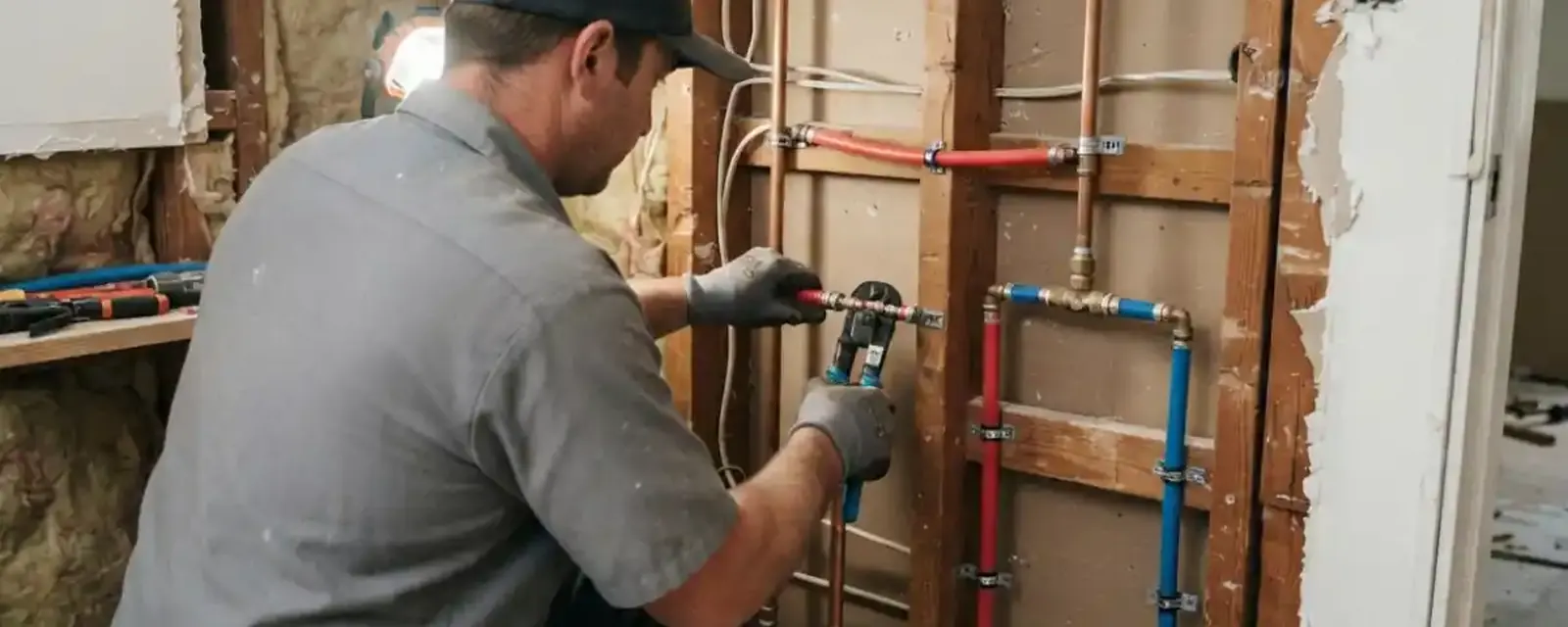
- The plumber maps the house and plans pipe runs, usually through the attic or crawl space to limit wall damage.
- New lines are run, connected to fixtures and the water heater and pressure tested.
- Wall and ceiling openings are kept small and patched, or marked for a drywall contractor.
- Water is turned back on, every fixture is checked and the plumber explains what was done.
Low water pressure: where to look first
Low pressure at every tap points to the supply side, such as a partly closed main valve, a failing pressure regulator, a leak ahead of the house or pipes that have narrowed from corrosion. Low pressure at one fixture is usually a clogged aerator or a bad cartridge, which is a faucet problem and not a pipe problem.
Open the main valve fully, test an outdoor spigot and compare hot and cold. If only hot water is weak, scale in the water heater or its lines is a good suspect. If the whole house is weak and the meter spins with everything off, a leak is stealing flow, and leak detection comes first.
Permits and licensed work
The City of Huntsville requires permits for water and waste piping replacements and inspects the work in stages. A licensed plumber handles the permit, schedules the inspection and keeps the repipe from stalling. Ask for the Responsible Master Plumber's license number and verify it with the Texas State Board of Plumbing Examiners.
Repipe work sometimes follows a leak. If the problem is a single break, start with burst pipe repair or leak detection first.
Whole-house or partial repipe
A partial repipe replaces one problem zone, such as a bathroom group or the lines under the slab. It costs less and makes sense if the rest of the pipe is sound. A whole-house repipe makes sense when the pipe material is old throughout. If your leaks are under the slab, see slab leak repair for reroute options.
Living through a repipe
A repipe disrupts the house for a few days. Water is shut off for part of each day, walls may have small access holes and furniture near the work needs to be moved. Plan for showers somewhere else on the day the lines are cut over.
Ask the plumber for a day by day plan, and ask what you will need to clear before the crew arrives. A clear path to the attic or crawl space speeds the work.
What a repipe quote depends on
Insurance seldom covers repiping for age, though it may pay for water damage from a sudden failure. Call for a price after describing your pipe type.
New supply piping is sized and installed to the International Plumbing Code (IPC), which the City of Huntsville lists as its plumbing code at the 2024 edition.
Repiping questions
Yes. Repiping covers Huntsville, New Waverly and Riverside. For an emergency leak, call the 24/7 line.
Many take a few days depending on size. The plumber gives a schedule after seeing the house.
Water is usually off for part of each day. The plumber plans around your schedule.
The City requires permits for water piping replacements. A licensed plumber handles that.
PEX is approved for potable water by plumbing codes. Ask the plumber which brand and fittings they use.