
Meter still running or a high water bill
A water meter is a simple tool. With every tap, appliance and irrigation line off, the leak indicator on the meter should sit still. If it spins or the register creeps, water is going somewhere, and it is either inside the house, under the slab or in the buried line between the meter and the foundation.
The City of Huntsville's water department maintains about 10,587 meters, so your meter is a city-read device and a good first diagnostic. Compare a morning reading with an evening one after a few hours with no use. Then compare your bill to the same month last year. A jump that keeps climbing is a leak signal, not a weather signal.
What to do while you wait for leak detection
- Close the main valve if you are leaving the house.
- Note the meter reading and the time.
- Move valuables away from damp areas.
- Do not cut into a wall or floor yourself.
- Keep your last few water bills handy.
Wet ceiling, damp wall or a warm spot on the floor
A stain on a ceiling can come from a supply line, a drain line or the roof, and guessing wrong costs a patched ceiling that stains again. Warm spots on a floor point to a hot supply line leaking under the slab. Musty smell with no visible water points to a leak inside a wall.
Do not cut into drywall yourself. A plumber can use a moisture meter and thermal imaging to track where water travels, which is often not where it appears. If water is actively coming through a ceiling, turn off the main, turn off power to that room and call right away. Related slab and foundation cases are covered under slab leak repair.
How leaks are found without demolition
- The plumber isolates the system. Fixtures stay off, the meter is watched and the supply lines are pressure tested in sections.
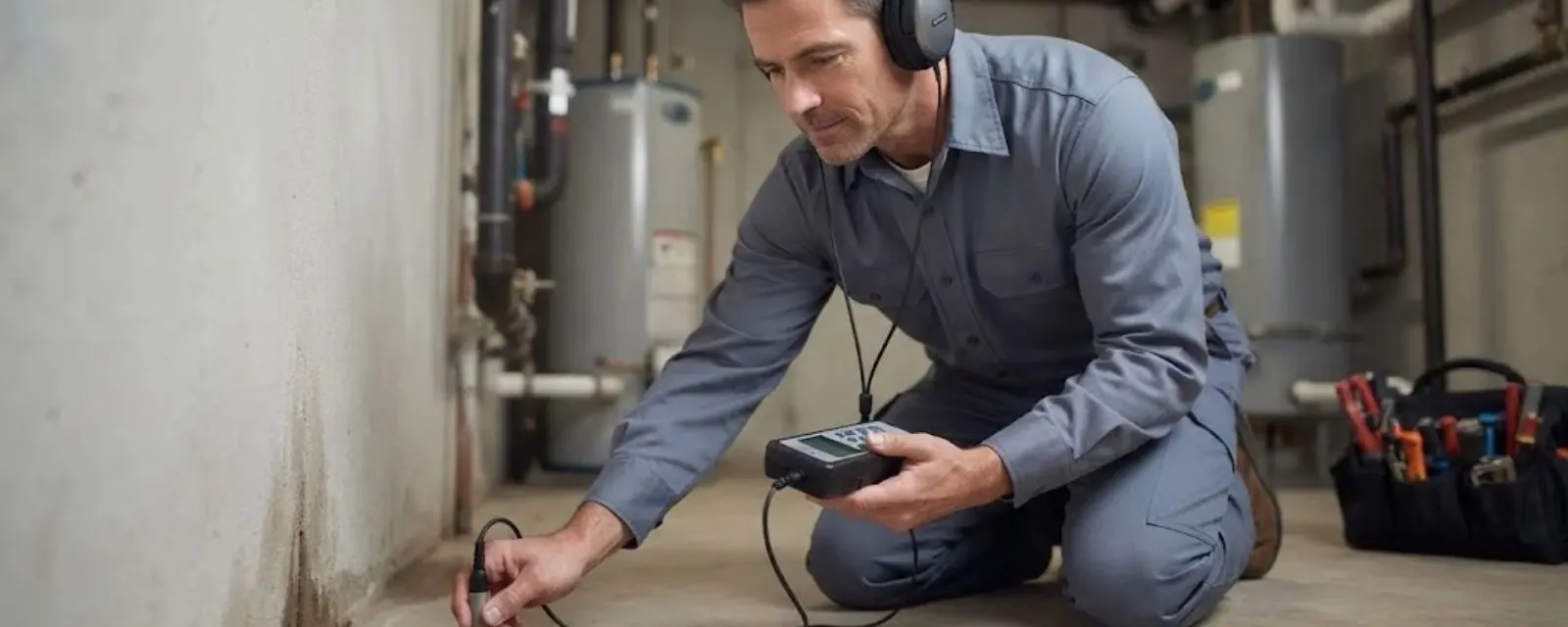
- Acoustic listening equipment picks up the sound of water escaping a pressurized pipe, and the plumber follows the loudest point.
- Thermal imaging and moisture readings confirm which wall, ceiling or floor area is involved.
- The leak is marked, the repair options are explained and any opening is kept as small as the pipe allows.
Underground, under-house and yard leaks
A leak between the meter and the house is a service line leak and is usually the homeowner's responsibility. Signs are a soggy patch of lawn with no rain, a drop in water pressure or a meter that runs when the house is dry. For those cases see repiping and our line repair work when the pipe itself has failed.
Many Huntsville homes sit on slab foundations, and others on piers with plumbing under the floor. Under-house leaks in pier-and-beam homes show up as stained subfloors, sagging insulation or damp soil in the crawl space. Walker County's forest soils are described as sands and clays, and clay moves as it wets and dries, which stresses buried pipe. Sprinkler and irrigation leaks show up the same way, so check the system zones during a call.
Pool, irrigation and commercial leaks
Pool and spa leaks are a different type of search and are not handled in the same visit as a house leak, so tell the dispatcher what you are dealing with. Irrigation leaks are common in yard systems and the plumber can pressure test the zone line. For commercial properties, a leaking supply or a slab leak under a tenant space can be urgent, and our commercial plumbing page covers business calls.
What changes the cost of leak detection
Many policies cover sudden water damage and exclude long-term seepage, and the plumber's detection report can help document the cause. Check your policy and keep photos. Call for the price on your property.
Pressure testing a supply system follows the same logic as the test in the International Plumbing Code (IPC), the plumbing code the City of Huntsville lists at its 2024 edition.
What homeowners ask about hidden leaks
Yes. The 24/7 line takes active leak calls day and night. Shut the main valve and call, and tell the dispatcher where the water is showing up.
Check the meter with everything off. If the indicator moves, water is escaping. A rising bill, low pressure, musty smell and warm floor spots are other signs.
Usually not to find the leak. Acoustic and thermal tools narrow the search to a small area, and any opening is kept as small as the repair allows.
Generally the property owner owns the service line from the meter to the building. Ask the City of Huntsville water department how it handles the meter side.
Yes. Hot water slab leaks often show as warm floor spots and a running meter, and acoustic equipment pinpoints the pipe before repair.