
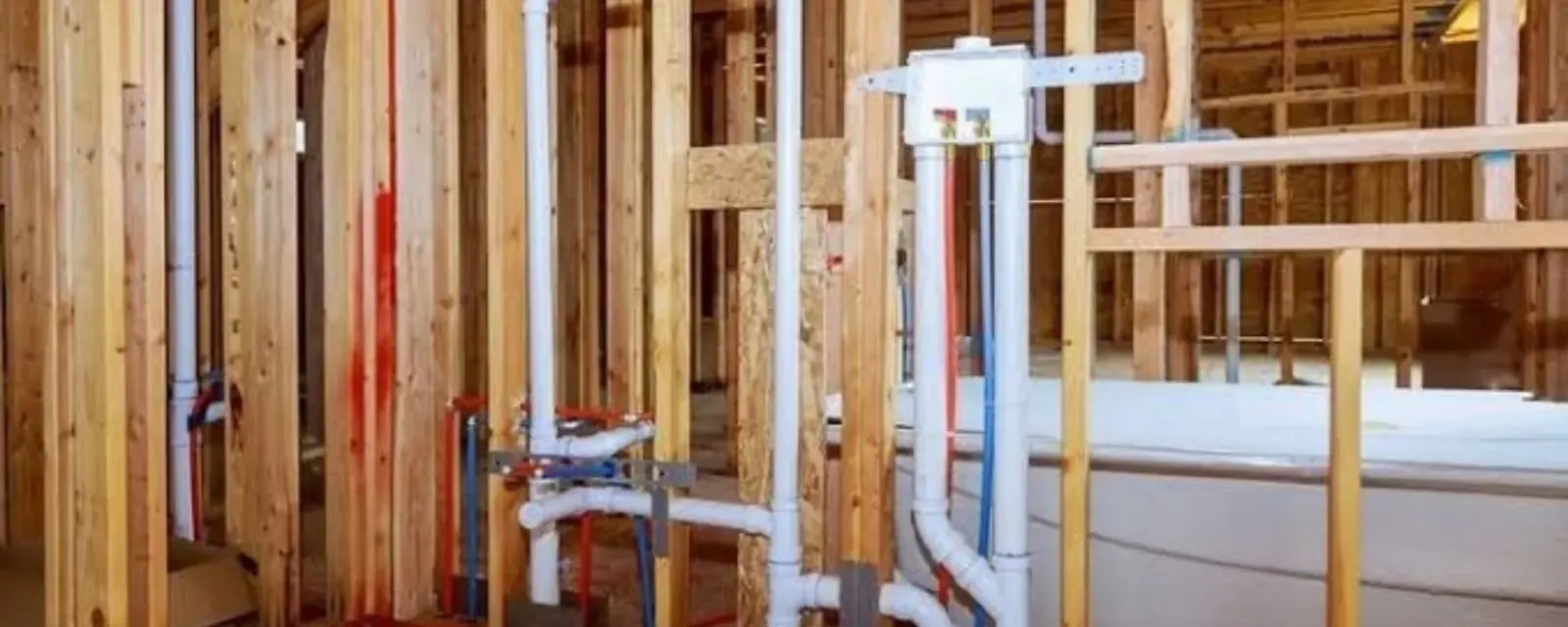
Remodels, additions and new lines
A bathroom remodel may move a toilet, add a shower or swap a tub for a shower, each of which changes supply and drain lines. A kitchen remodel moves the sink or adds a dishwasher or pot filler. An addition adds fixtures far from existing lines and needs a plan for drainage by gravity.
The City of Huntsville states that residential plumbing permits are required for additions or remodels, including showers. Ask the permit office what applies to your project, and a licensed plumber normally handles it.
Permits and inspections
On new work, the city lists pier, foundation and ground plumbing, plumbing top-out and final plumbing as inspection stages. Ground plumbing is inspected before the slab is poured, top-out before walls are closed and final when fixtures are set.
An owner of an occupied homestead may obtain the permit personally. Otherwise a licensed plumbing contractor obtains the trade permit. Verify any contractor's license through the Texas State Board of Plumbing Examiners.
Fixture installation
Each fixture has its own supply, trap and vent needs. Installation includes shutoff valves, supply lines and a leak test. For repairs to existing fixtures see faucet repair and toilet repair.
- Sinks and faucets.
- Toilets and bidets.
- Showers and tub valves.
- Dishwasher and washing machine connections.
- Outdoor spigots and hose bibbs.
- Water softener and filter hookups.
Fixtures we install and what to know about each
Toilets and bidets
A new toilet needs a flange at the right height, a fresh wax ring and a shutoff valve that closes. If the floor is soft around the old toilet, the subfloor needs repair before anything new is set.
Showers and tubs
Valves and drains are set before walls are closed, and the valve type affects the trim you can use. Leak testing the pan or tub before tile goes up saves a lot of trouble later.
Sinks and faucets
A faucet swap is quick when the shutoff valves work. A new sink in a new location needs a drain, a vent and supply lines, and that is a bigger project.
Appliances
Dishwashers, washing machines and ice makers need supply and drain connections. Braided stainless supply lines and a drain pan under a washer in a living space are cheap insurance.
Planning the job
- Walk the space and note where water, drains and vents are.
- Draw the plan, identify permit needs and agree on the scope.
- Rough in supply and drain lines, then inspect before walls close.
- Set fixtures, test every connection and complete the final inspection.
New installation versus repair
| Work | Typical needs |
|---|---|
| Replace a faucet | Shutoff valves, no permit usually. |
| Move a toilet or sink | New drain and vent, permit. |
| Add a bathroom | Supply, drain, vent, permit and inspections. |
| New water heater location | Supply, gas or power, venting. |
Questions to settle before work starts
Settling these in writing prevents most disputes. A plumber who is happy to answer them before the job begins is a good sign.
- Who pulls the permit and schedules inspections.
- Which fixtures are you supplying and which is the plumber supplying.
- Who patches drywall and tile.
- What happens if hidden problems are found in the walls.
- How is the work tested and what warranty applies.
What installation pricing depends on
Installation is not an insurance matter. Call for a price and share a drawing or photos.
Rough-in, venting and fixture connections are set to the International Plumbing Code (IPC), which the City of Huntsville lists as its plumbing code at the 2024 edition.
Plumbing installation questions
Yes. Describe the project and the plumber will visit to plan it.
The City requires permits for additions or remodels including showers. Ask the permit office, and your plumber can handle it.
Yes, with inspections at ground, top-out and final.
Yes, but it requires drain and vent changes and often a permit.
Installation is scheduled. For urgent leaks call the 24/7 line.