
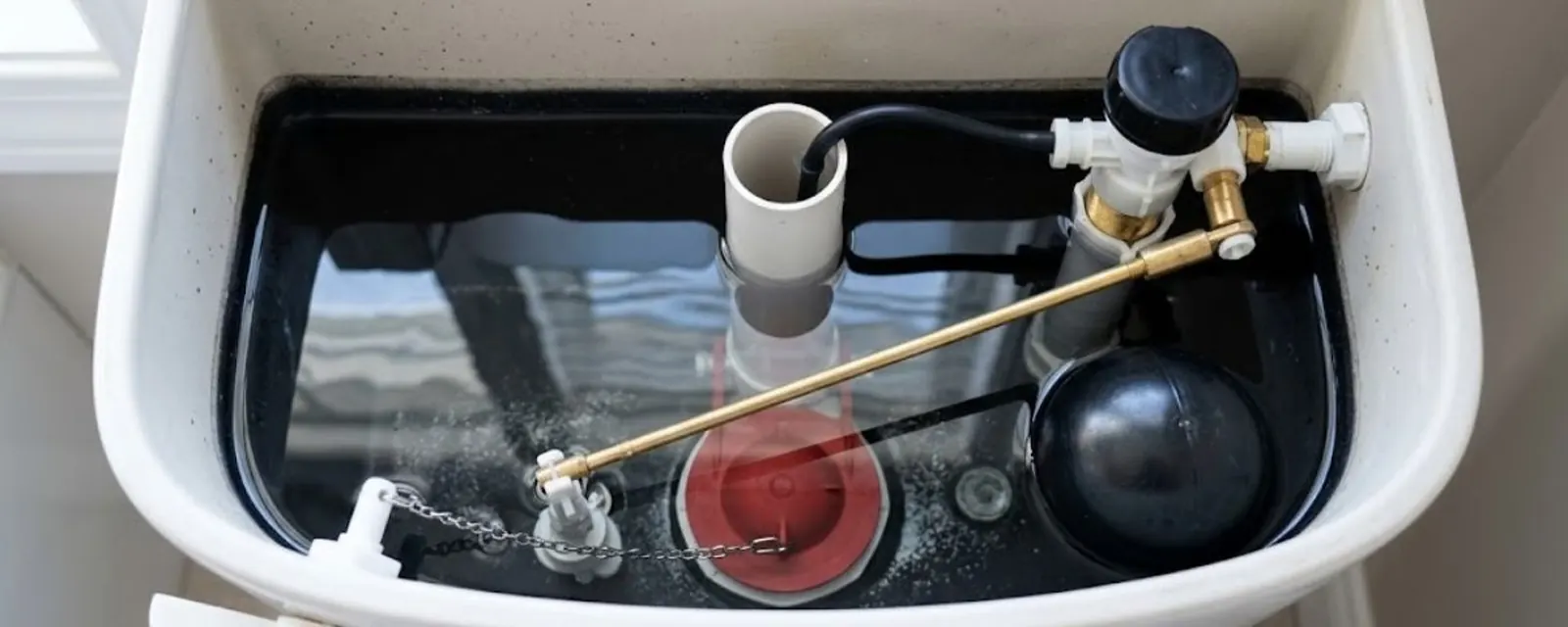
A toilet that keeps running
A running toilet is usually a flapper that no longer seals, a chain that is too tight or too loose or a fill valve that does not shut off. Lift the tank lid and watch. If water trickles into the bowl, the flapper leaks. If water runs into the overflow tube, the fill level is too high.
Rubber wears out. The City of Huntsville's 2025 report lists chloramine as the disinfectant, and chloramine can wear rubber parts over time, so flappers often last fewer years here than people expect.
- Close the shutoff valve at the wall.
- Flush to empty the tank.
- Replace a worn flapper with the right type.
- Adjust the chain to leave a little slack.
- Adjust the float so water stops below the overflow tube.
A toilet that will not flush well
Weak flushes often come from mineral buildup in the rim jets, a low tank water level or a partial clog. Check the water level in the tank first. Clean the rim holes with a small brush. If that fails, a partial blockage may be sitting in the trap or the drain line.
Use a flange plunger and push slowly to avoid splashing. Never mix chemical cleaners in a toilet.
When it will not stop overflowing
- Do not flush again. Lift the tank lid and push the flapper down to stop the flow, or close the shutoff valve.
- Turn the shutoff valve at the wall clockwise to stop water to the tank.
- Use towels to contain water and switch off power to wet outlets if needed.
- Call if the bowl keeps filling or sewage is backing up.
Common problems and fixes
| Problem | Likely cause | Fix |
|---|---|---|
| Runs constantly | Worn flapper or fill valve | Replace the part. |
| Weak flush | Clogged rim jets or low tank level | Clean and adjust. |
| Wobbles | Loose bolts or wax ring | Tighten, reset the toilet. |
| Leaks at the base | Failed wax ring | Reset with a new ring. |
| Sweats and drips | Condensation | Insulated tank liner or mixing valve. |
Parts worth keeping on hand
Check the size of your flush valve before buying a flapper. A two inch and a three inch flapper are not interchangeable.
- A universal flapper sized for your toilet.
- A fill valve kit.
- A flange plunger.
- A wax ring and closet bolts.
- A spare supply line with a shutoff-style fitting.
When it is a bigger problem
If several fixtures back up, if the toilet bubbles when another fixture drains or if water appears around the base after flushing, the issue may be the main line or a failed seal. Our toilet repair page covers the cases that need a plumber and drain cleaning covers blockages deeper in the line.
We serve Huntsville, New Waverly and Riverside night and day.
Reading the sounds your toilet makes
A hiss after flushing means the fill valve is still passing water. A periodic refill with no one using it means the flapper is leaking. A gurgle from the bowl when another fixture drains means air is being pulled through the trap, a sign of a partial blockage or vent trouble.
Noise is a free diagnostic tool. Listen at night when the house is quiet.
Prevent repeat problems
Flush only toilet paper, even if a wipe says flushable. Replace flappers every few years. Exercise the shutoff valve once a year so it works when needed.
A local note on the supply
The City of Huntsville reports chloramine at an average of 3.09 mg/L, with a range from 1.12 to 3.92 mg/L. Flappers labeled chloramine resistant last longer in this kind of water, so ask for one at the hardware store.
Toilet flange and fixture spacing rules come from the International Plumbing Code (IPC), which the City of Huntsville lists as its plumbing code at the 2024 edition.
Source type: City of Huntsville 2025 Water Quality Report
Toilet repair questions
A worn flapper or fill valve is the most common cause.
Try the dye test with food coloring in the tank.
Avoid it. Use a plunger or call.
Rubber parts often last several years, less with chloramine.
Yes. Call the 24/7 line for overflow or backups.